Proper roof ventilation in Nashville, TN protects your roofing system from the inside out. ROOFMAN TN inspects attic airflow, identifies ventilation gaps, and installs ridge vents, soffit vents, and other solutions sized for your specific roof.
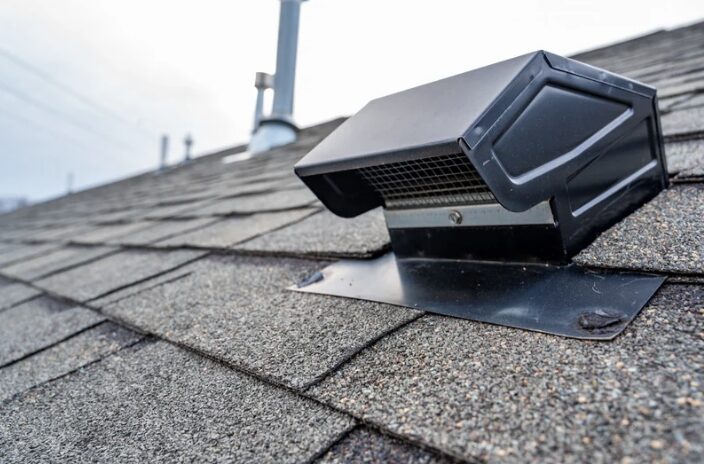
In Middle Tennessee summers, unventilated attics can become dangerously hot. Excess heat accelerates shingle aging and stresses the underlying deck.
Warm indoor air carries moisture into the attic. Without a clear path to exit, that moisture condenses on rafters and sheathing, creating conditions that invite wood rot and mold.
Shingle manufacturers design their products to perform within a specific temperature range. Excessive heat from below shortens the life of even premium shingles.
In colder months, a warm attic melts snow unevenly on the roof. Proper ventilation helps maintain a consistent roof deck temperature, reducing the risk of ice dams at the eaves.
Heat radiating down from an overheated attic makes upper floors harder to keep comfortable. Improving airflow can help your living spaces feel more consistent through the seasons.
Every ROOFMAN TN ventilation consultation starts with a thorough inspection of your current attic airflow, existing vents, and roof design before any recommendation is made.
Many homeowners discover a ventilation problem only after damage has already started. The signs are often subtle at first. You might notice that upper rooms feel significantly warmer than the rest of the house in summer, or that your HVAC system runs harder than expected. In winter, you may see frost or condensation forming on surfaces inside the attic, or notice that ice is building along the lower edge of your roof after a cold snap.
Inside the attic, the evidence is more direct. Discolored or stained roof sheathing, damp insulation, musty odors, and visible mold growth all point to trapped moisture that has not had a way to escape. Shingles that are curling, cracking, or aging faster than expected can also reflect heat stress from below, not just weathering from above. These are situations where a roofing inspection catches the problem before it becomes a replacement.
If your home has had roof repairs in Nashville more frequently than expected, or if a previous inspection noted deck deterioration, ventilation is worth examining as a contributing factor. ROOFMAN TN looks at the full picture during every inspection, not just the surface of the roof.
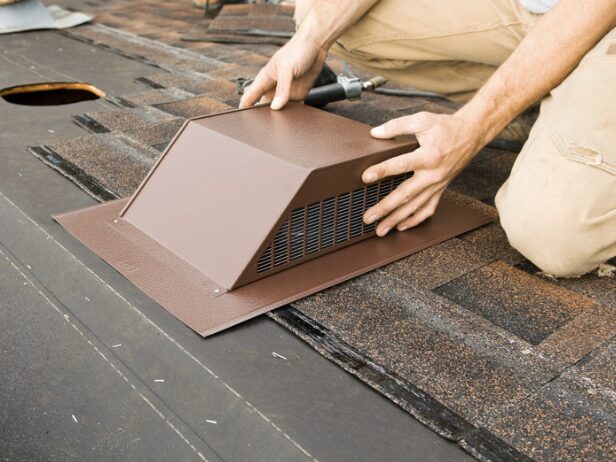
A properly ventilated attic works on a simple principle: cool outside air enters low, rises as it warms, and exits high. The most common system pairs soffit vents along the underside of the eaves with a ridge vent running the length of the roof peak. When both components are present and unobstructed, air moves continuously through the attic space without mechanical assistance. This is called balanced, or passive, ventilation, and it is the approach most roofing professionals and shingle manufacturers recommend for residential roofs in climates like Middle Tennessee's.
Soffit vents are the intake side of this system. They sit in the overhang of your roof and pull outside air into the attic. If soffit vents are blocked by insulation that has been pushed to the eaves, or if they were never installed, the system cannot draw fresh air in regardless of how many exhaust vents exist at the top. Ridge vents, installed along the peak of the roof, serve as the exhaust side. They allow the warmer, more humid air that has accumulated near the top of the attic to escape continuously. A ridge vent works best when paired with adequate soffit intake; without that balance, it becomes far less effective.
Some homes use powered attic ventilators, turbine vents, or gable vents instead of, or in addition to, a ridge-and-soffit system. Each has appropriate applications depending on roof geometry, attic configuration, and existing construction. A home with a complex roof line, multiple valleys, or a low-pitch design may need a different approach than a straightforward gable roof. At ROOFMAN TN, the inspection process looks at what is already in place, how air is currently moving, and what modifications would bring the system into balance. We do not recommend the same solution for every house.
Homeowners across our service area, from Hendersonville to Brentwood, deal with a mix of older homes that were built before modern ventilation standards and newer construction where vents have become blocked over time. In both cases, the fix starts with understanding what is actually happening in the attic before any work begins.
Call 615-389-3390 or submit a request online and a ROOFMAN TN crew member will schedule a time to inspect your roof and attic. There is no charge and no obligation for the inspection.
We examine your existing intake and exhaust vents, check for blocked soffit vents, review the attic for signs of moisture or heat stress, and evaluate how your current ventilation setup matches your roof design.
We walk you through exactly what we found, including photos when helpful, and explain what the current ventilation is doing well and where it falls short. We keep it straightforward, not technical.
Based on your roof's geometry, existing construction, and the problems identified, we recommend a ventilation approach that fits your home. Ridge vent additions, soffit vent clearing or installation, and other improvements are scoped to your situation.
Our crew installs the recommended ventilation components using premium materials, ensures all penetrations are properly sealed to prevent leaks, and confirms the attic is now set up for balanced airflow.
Roof ventilation is not a standalone product. It is a component of the roofing system as a whole, and it interacts directly with the shingles, deck, underlayment, and insulation below. This is why at ROOFMAN TN we address ventilation as part of every full roof replacement conversation, not as an afterthought. When a homeowner in the Nashville area is replacing an aging roof, it is the right moment to confirm that the ventilation underneath is set up correctly before new shingles go on top.
For commercial properties and residential homes alike, the performance of the roofing system over its full lifespan depends partly on conditions inside the attic. Heat and moisture that build up without an exit path work against materials from the inside. Premium shingles installed over a hot, damp attic will not perform the same as those installed over a properly vented one. Our crews in Mt. Juliet, Goodlettsville, and across Middle Tennessee see this regularly in older homes where the original vent design was never updated to match current standards or changes made during remodels.
We also serve homeowners navigating insurance claims after storm damage, and ventilation often comes into the picture during those inspections. If a storm has displaced ridge vents or damaged soffit areas, restoring proper airflow is part of restoring the roof correctly. Our team works with homeowners through that process and helps document what was damaged so the claim reflects the full scope of needed repairs. Homeowners in Hendersonville, Portland, and Clarksville have worked with ROOFMAN TN through exactly this kind of multi-part repair process.
If you are also looking at gutters as part of a broader roofing project, our team handles roof replacement in Brentwood and seamless gutter installation together, so you are not coordinating two separate contractors. Similarly, homeowners in Spring Hill and other parts of Middle Tennessee can get a single estimate covering the full scope of work from one locally owned team.
The most reliable way to know is to have a roofing professional inspect your attic and measure your intake and exhaust vent area against your attic's square footage. Common indicators of insufficient ventilation include excessive heat in upper rooms, condensation or moisture staining on attic framing, and shingles that are aging faster than expected. ROOFMAN TN offers free inspections, so you can get an honest assessment without any cost upfront. Call 615-389-3390 to schedule.
Soffit vents are the intake side of your ventilation system, installed along the underside of the roof overhang to bring outside air into the attic. Ridge vents run along the peak of the roof and serve as the exhaust, allowing warm and humid attic air to escape. A balanced system needs both working together. Having one without the other significantly reduces how effectively your attic moves air.
Yes, poor attic ventilation can contribute to roof damage over time. Excessive heat in the attic stresses shingles and the roof deck from below, while trapped moisture can cause wood rot, mold growth, and deterioration of insulation and structural framing. These problems develop gradually, which is why catching a ventilation issue during a routine inspection is much better than discovering it during a larger repair.
Roof replacement is one of the best times to evaluate and update ventilation. When shingles and underlayment are being replaced, making ventilation improvements at the same time is more efficient and avoids disrupting a newly installed roof later. ROOFMAN TN includes a ventilation review as part of every roof replacement consultation so you have the full picture before work begins.
Yes, storm damage frequently affects ventilation components like ridge vents and soffit areas. ROOFMAN TN inspects your full roofing system after a storm, documents any ventilation damage, and can help you work through the insurance claim process to make sure those repairs are included in the scope. We serve Nashville and the surrounding Middle Tennessee communities and are available for storm damage inspections.
ROOFMAN TN provides roof ventilation inspections and installations across Middle Tennessee, including Nashville, Franklin, Brentwood, Murfreesboro, Hendersonville, Gallatin, Mt. Juliet, Lebanon, Goodlettsville, White House, Springfield, Portland, and Dickson. To request a free inspection in your area, call 615-389-3390 or submit a request through roofmantn.com.
Ready to get started? Talk to the ROOFMAN TN team.
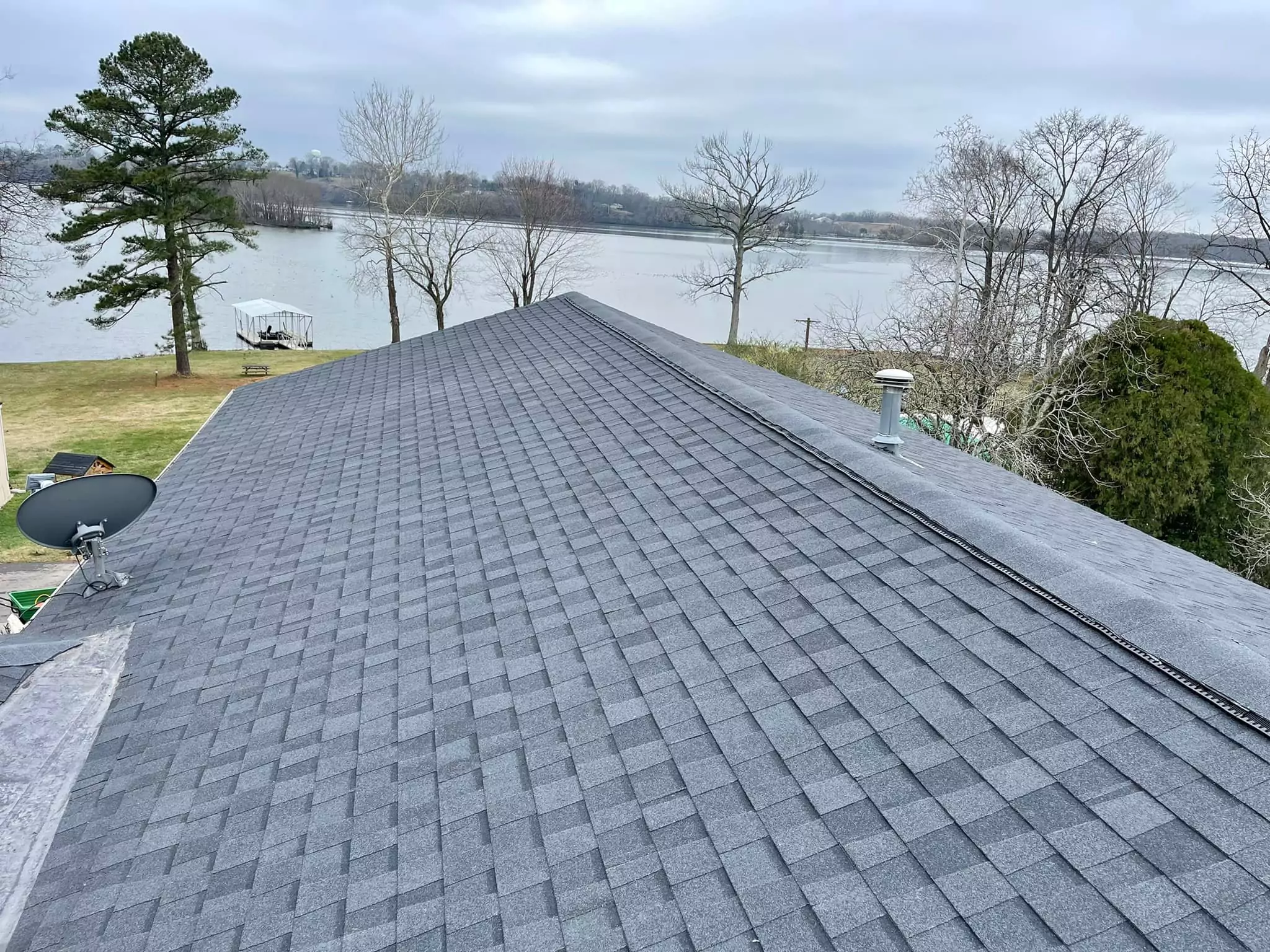

I had no idea what replacing a roof entailed, but Roofman/TN Pro Solutions couldn’t have made the process easier!
I didn’t realize that picking a roof color would be difficult either, but I wanted to get it right. Matt Campbell went above and beyond to get me extra sample boards, sent me photo after photo, and showed great patience as I spent days on my decision.
In the end, I decided not to try to match what I originally had, and go with my first gut choice (which also happened to be his recommendation), and I absolutely love it! It actually changed the overall aesthetic of my home and made me love it even more.
His team was fast and professional, and he was involved every step of the way to make the whole experience painless.
I highly recommend Roofman for all of your roofing needs.

Had several shingles missing after a storm. I called Tennessee pro solutions after it was recommended on Facebook and could not be happier! The salesman was very knowledgeable and navigated me through the whole process. I even have noticed a energy savings on my electric bill due to new vent system they recommended! Facebook and Tennessee Pro Solutions for the WIN!! Thank you again!
This was a great experience Matt really took care of me got it done way faster than expected a few weeks later i realized my roof was leaking i gave Matt a call and he came out within the hour and had it fixed same day all in all my experience was amazing the roof looked fantastic and i will definitely be giving my business to them from here on out it’s so amazing to be about to have great connections and that’s what Tennessee Pro Solutions is a great connection.
I can’t praise this company enough for coming out after a storm that caused significant damage and ultimately resulted in a full roof replacement. Their knowledge and professionalism made the process extremely easy while dealing with insurance as well as keeping things tidy while under construction which is very important in my eyes!
Very pleased with this company. We had a roof leak. When we contacted the company, they were very responsive, came and patched our roof & helped deal with insurance for this matter! It was replaced within a week! Highly recommend!
Thank you Matt for helping at a spare of the moment for a seller of mine and also finding things that were not necessary needing to be done on an inspection list. You are honest , trustworthy and a great asset to our community! Definitely on my vendor list to call for now on!!
For quality of service and a commitment to excellence, I would highly recommend Matt Campbell and Tennessee Pro Solutions. Matt has completed several projects for us and we have always been extremely pleased with the results. His work ethic and dedication to service are unmatched.
Copyright © 2025 ROOFMAN LLC. | All Rights Reserved